Acoustic geometry
Horn and waveguide wall thickness, cutter access, draft, parting strategy, surface continuity, datum choice, and a CNC-to-tooling validation route.
Waveguides · horns · throat adapters
Design-to-Production Support
Metalcorex works with professional audio design teams to resolve manufacturability, material, tolerance, finish, tooling, inspection, and production-transfer decisions before they become expensive changes.
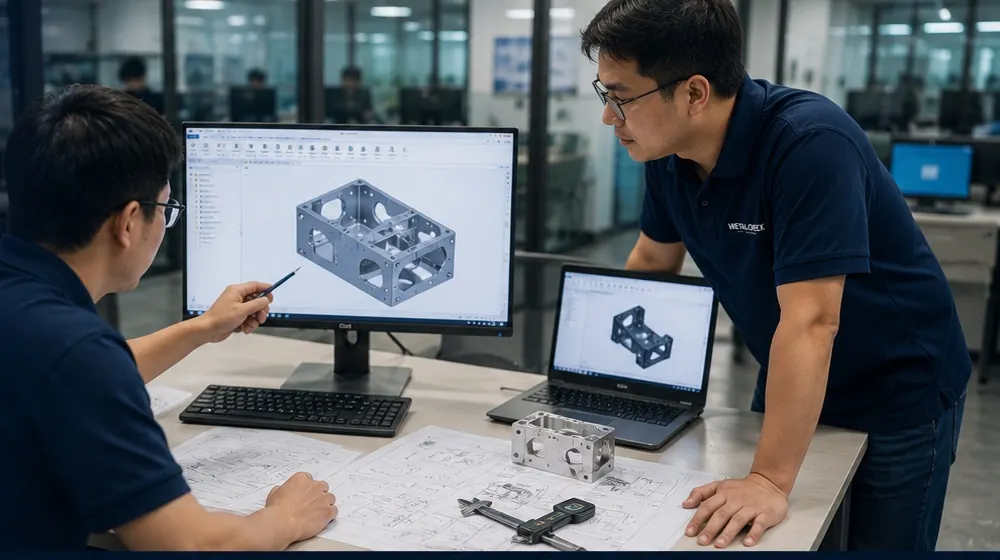
Where We Add Value
Our role is manufacturing-focused: identify process risks, suggest practical alternatives, define a prototype route, and align the drawing with repeat production. We work from your performance targets, mating parts, industrial design, quantity, and approval plan.
Scope boundary: final acoustic performance, structural ratings, regulatory compliance, and product certification remain with the customer's qualified design authority and test partners.
Six Review Tracks
Horn and waveguide wall thickness, cutter access, draft, parting strategy, surface continuity, datum choice, and a CNC-to-tooling validation route.
Waveguides · horns · throat adaptersLoad path, bearing faces, pin retention, hole position, weld access, heat treatment, corrosion exposure, inspection points, and traceability notes.
Fly bars · links · yokes · quick-release pinsHeat-sink route, contact flatness, fin geometry, airflow, vent placement, connector clearance, shielding, masking, and assembly access.
Amplifier housings · heat sinks · rear panelsOpen-area target, perforation pattern, edge safety, bend radius, flatness, weld distortion, rack fit, coating thickness, and shipping protection.
Grilles · chassis · brackets · rack hardwareResin choice, rib and boss design, draft, gate and ejector strategy, insert retention, texture transition, shrinkage, and assembly stack-up.
Frames · handles · corners · pole cupsSeal compression, drainage, UV and corrosion exposure, finish sample, color and texture boundary, critical cosmetic zones, and packaging contact points.
Outdoor audio · visible panels · seals · trimSupport by Program Stage
Compare process routes, likely materials, tooling implications, assembly concept, and the cost drivers worth designing around.
Review CAD and drawings for access, radii, draft, bends, inserts, threads, tolerance stack-up, finish allowance, and inspection feasibility.
Choose representative prototype methods, define the critical checks, document deviations, and separate geometry learning from cosmetic approval.
Close DFM actions, confirm material and finish samples, approve first articles, and establish a measurable production standard.
Control revisions, inspection records, batch consistency, packaging, nonconformance feedback, and cost-down changes without losing function.
Useful Outputs
The depth depends on project stage and supplied information, but the goal is always the same: make decisions visible before production commitment.
Start a Constructive Review